 From NGO Funding to Climate Education: The Parliamentary Trail of a Ugandan Teen Advocate
  Kampala Standard School Kyanja Opens Nursary and Primary Admissions
  BANK OF BARODA SHS2.5B DIVIDEND PAYMENT TO DR. SUDHIR RUPARELIA IS AN EYE OPENER.
  Human Trafficking:Don Chris remanded over 127 counts of allegedly conning job seekers
  Marriott International has officially entered Uganda’s hospitality market.
Uganda Electoral Commission Raises Alarm Over Surge in Election Misinformation
Uganda Electoral Commission Raises Alarm Over Surge in Election Misinformation
Kampala, Uganda — The Electoral Commission has sounded the alarm over a growing wave of fabricated images, videos and misleading online content circulating as the country edges closer to the 2026 General Elections.
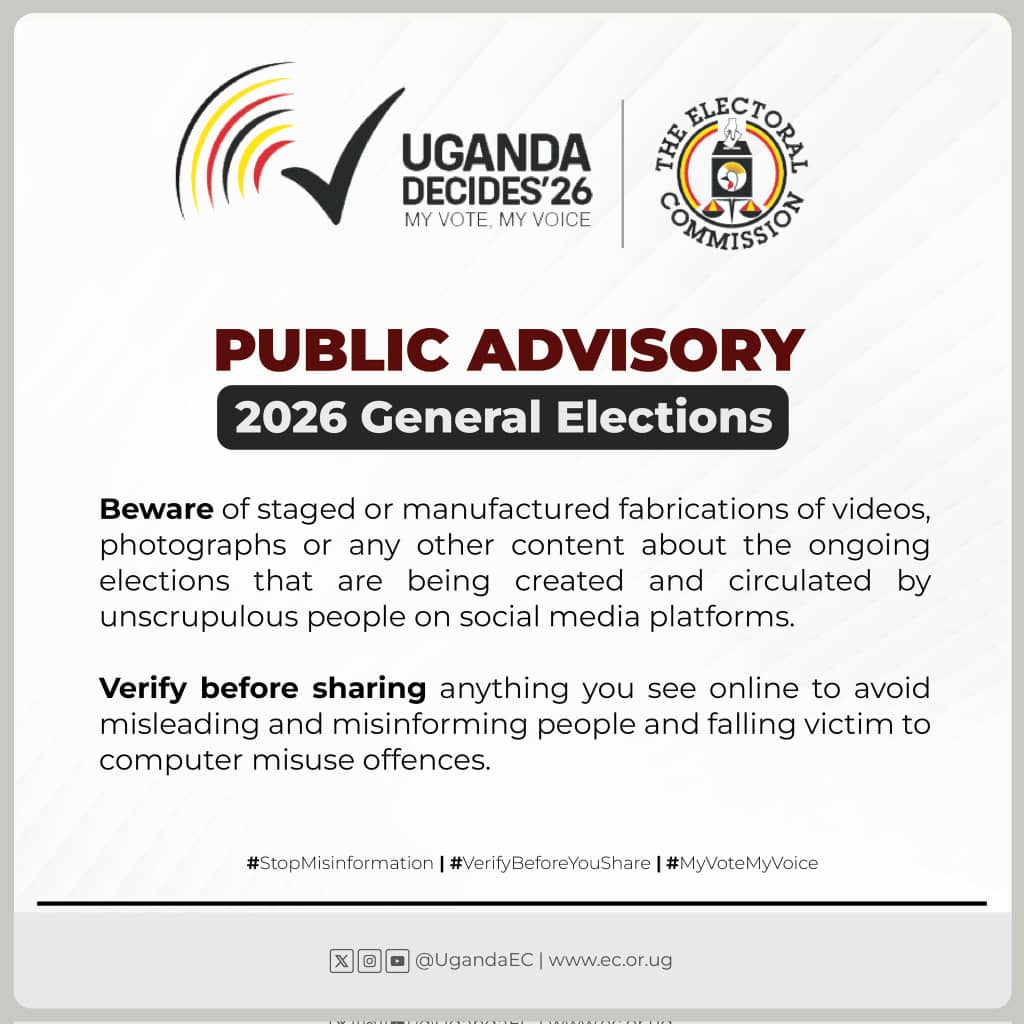
The warning, issued on Thursday through an official advisory under the Uganda Decides ‘26 banner, cautions voters about a sophisticated misinformation campaign targeting social media platforms. According to the Commission, unknown individuals are producing digitally altered footage and staged incidents aimed at distorting public perception of the electoral process.
Officials say the rise of manipulated political content has intensified in recent weeks as candidates campaign and early results trickle in from polling centers across the country.
“We are seeing staged and manufactured material being shared widely, which poses a threat to the credibility of the elections,” a Commission source familiar with digital monitoring said. “Some of the videos and photos are difficult to detect without proper verification tools.”
Digital Propaganda Takes Center Stage
The EC’s warning comes at a time when social media use in Uganda is at an all-time high, and political messaging—both legitimate and deceptive—travels rapidly across platforms such as X (formerly Twitter), WhatsApp, TikTok and Facebook.
Analysts say misinformation is evolving beyond simple rumours. Rather than text-based hoaxes, citizens are increasingly confronted with altered photos, AI-generated voice recordings, and video clips taken out of context.
Security experts believe these tactics are being used to sow distrust, provoke conflict, and manipulate public sentiment in the heat of the elections.
Public Urged to Verify Before Sharing
The Commission is urging Ugandans to treat every online claim with caution, double-check sources, and rely on verified information before forwarding election-related content to others.
The advisory warns that users who circulate falsehoods could unknowingly break the law, as the Computer Misuse Act criminalizes the deliberate spread of harmful or misleading information.
Growing Concerns Over Election Integrity
Civil society groups have welcomed the warning, noting that fabricated material has previously triggered tension and violence, particularly in urban centres where young voters rely heavily on online platforms for political updates.
Technology researchers are calling for digital literacy campaigns—especially in rural areas—to help voters identify manipulated content ahead of the tally announcement.
Meanwhile, fact-checking organisations say they are already overwhelmed by the volume of false political claims requiring verification.
A High-Stakes Digital Battlefield
With the presidential race tightening, misinformation is expected to escalate as interest groups seek to sway undecided voters or undermine trust in the final results.
Political observers argue that this year’s election may be decided not only at polling stations, but also on smartphones, trending hashtags and viral videos.
The Electoral Commission has repeated its commitment to clean information flow, urging citizens to prioritize accuracy over speed.
Leave a Comment
Your email address will not be published. Required fields are marked *