 BLUE TYGAR REFLECTS ON TRUE LOVE IN NEW SINGLE
  REVIVAL EVOLUTION IN MZEE Y.K MUSEVENI'S FAMILY.
  Juba Could Get Karuma Power by Late 2026
  Mukasa Joseph Builds Roofing Business Serving Buddo and Kampala
  Uganda Hands Over Migration Chairmanship To Tanzania
 IDI AMIN’S MOTIVES TO ESTABLISH A BARRACKS IN LUGOLOGOLO VILLAGE-NGARAMA, ISINGIRO DISTRICT.
By Musa Rwamigoye
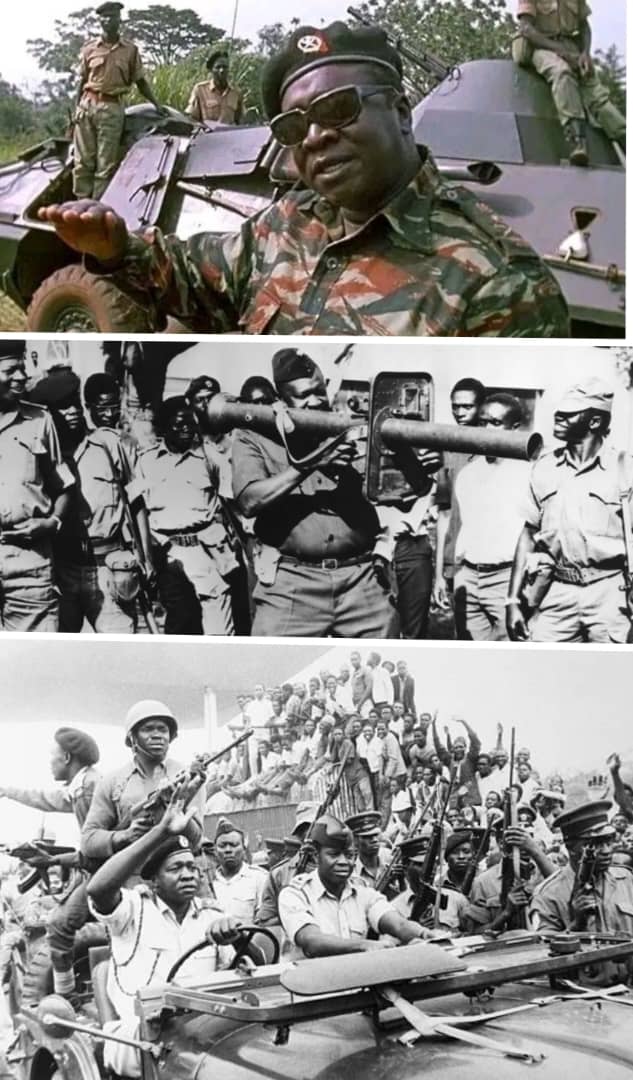
On 16th September 1972, the Front for National Salvation (FRONASA), led by President Yoweri Kaguta Museveni, launched a military attack in Simba Barracks in Mbarara as part of a broader, ill-fated invasion of Uganda from Tanzania intended to overthrow Idi Amin’s military government.
The Front for National Salvation (FRONASA), led by a young Yoweri Kaguta Museveni, established rear bases and training camps in Tanzania during the 1970s with the backing of President Mwalimu Julius Kamarage Nyerere to fight Idi Amin's regime. Key training wings included the Kaboya National Service camp near Bukoba, Nyamiyaga in Karagwe, and operational coordination in Moshi.
However, the attack failed due to poor coordination, tactical errors, and logistical setbacks, leaving the FRONASA rebel forces heavily repulsed and nearly annihilated by Amin’s military. Instantly, Idi Amin’s regime responded with sweeping counter-offensives and arrests of suspected rebels and underground collaborators across the country. Furthermore, Idi Amin established a military tribunal which sentenced captured participants and sympathizers to death, leading to public executions by firing squad in regional venues like Kabale Municipal Stadium, Mbale, Mbarara and Fort Portal to terrorize potential dissenters.
On February 10, 1973, Amin’s military council decreed that convicts be publicly shot in their respective home districts. Other simultaneous executions included individuals like Tom Masaba and Sebastiano Namirundi (in Mbale) and William Nkoko (in Jinja), alongside FRONASA-linked recruits executed at Kabale Stadium (such as Joseph Bitwari, James Karambuzi, and David Kangire), James Karuhanga in Mbarara and in Gulu town, Joseph Obwana and Labeja John were also executed publicly.
After Idi Amin intelligence team forming him that the main entrance of FRONASA rebels to Uganda was Bukanga, present day Isingiro District, Amin and his confidants embarked on the mission to strengthen defense and intelligence in communities that boardered with Tanzania especially Ngarama, Kasese and Burama.
REASONS BEHIND ESTABLISHENT OF SIMBA-NGARAMA BARRACKS IN 1973.
After the failed attack on Simba Barracks by FRONASA rebels in 1972, President Idi Amin instantly started preparation of establishing a heavy barracks in Lugologolo village, Ngarama Sub County, Isingiro District. It said that Amin’s intelligence had noticed that Ngarama had become a strategic location for smugglers who uses to smuggle goods from Tanzania to Uganda and from Uganda to Tanzania. Smugglers preferred Ngarama because it had a busy weekly market that operated on every Wednesday. Records shows that besides the market being full of local traders from Mbarara, Ibanda, Kyotera, Bushenyi Kabale and Ntungamo, the market also had foreign traders from Rwanda, Burundi and Tanzania.
Elders of Ngarama who used to benefit from the weekly market narrates that traders from Rwanda and Burundi mainly came to Ngarama Market to buy cattle and second hand clothes whereas traders from Kabale came for a type of sorghum called Katambindu which was basically purchased for brewing Omulamba, a popular local brew for Bakiga community.
Therefore, since many Ugandans from Isingiro-Ngarama were trading in Tanzania, when tension between Uganda and Tanzania escalated, Tanzania Minister for Defence Edward Moringe Sokoine ordered for the arrest of all Ugandans working in Tanzania and be taken for a place Karagwe District headquarters called Kayanga. Surprisingly, majority of the traders arrested came from Ngarama, Lugologolo village.
Shortly after being arrested, they were persuaded and later shifted to Kabanga for military training. In fact, on Christmas day of 1977, Ugandans who had finished receiving basic training penetrated and entered in Uganda and abducted citizens and took them to Tanzania.
Another key reason behind the establishment of Simba Ngarama Barracks was Nakivale Refugee Camp, a place that harbored Tutsi refugees from Rwanda. Amin’s intelligence had landed on information that some refugees had crossed Uganda-Tanzania border and joined FRONASA rebels in Tanzania. Foristance, a village near Nakivale refugee called Kazulugusi village harbored people like Fred Gisa Rwigema, Peter Bayingana, Chris Bunyenyezi, Nkagabasi, Bujingo and Kakwaya who later became FRONASA dangerous fighters. Therefore, the only way to curb down the movement of Refugees from their camp was to establish a nearby barracks purposely for thorough intelligence and intimidation.
Furthermore, elders of Ngarama have it in their minds that Amin established Simba Ngarama Barracks to limit movements of Ngarama people to Tanzania. According to some elders of Ngarama, there was a lot intermarriages in 1970s between Tanzanians and Ugandans living in Ngarama that ended up strong amity and fellowship between two communities neighboring each other. Therefore, it became hard for Amin’s intelligence soldiers to differentiate a Ugandans from Tanzanians. A relevant example of a crucial intermarriage that elders of Ngarama Community regularly talks about to have caused the1973-1979 Ngarama uncertainty by Amin’s soldiers was the marriage of a Ugandan woman called Owabiiso Rose a.k.a Kabina who had married a Tanzanian Military officer called Afande Bob working as a signaler of Tanzania People’s Defence Forces.
Afande Matovu Vianney asserts that the situation at that time forced Owabiiso Rose also to join FRONASA rebels in Tanzania. In fact, when FRONASA rebels with assistance of Tanzania People’s Defence Forces attacked Amin’s Soldiers and forced the leave Ngarama Sub County Barracks, Afande Owabiiso Rose a.k.a Afande Kabina was made OC quaterguard Ngarama Sub County barracks. Records shows that she was among the first group of women in the history of Uganda to FRONASA rebels and to go on war frontline. She served with FRONASA historicals like Late Chefe Ali, Col. Bosco Omure and Afande Makosa. Because of her valor, Afande Owabiiso Rose was loved by Afande Paul Silas Mayunga, commander of TPDF that entered Uganda with FRONASA to fight Amin. In fact, many FRONASA Veterans from Isingiro consider Afande Owabiiso Rose a.k.a Kabina to have had the same revolutionary characteristics of FRELIMO historical Afande Josina Abiathar Muthemba Machel .
When Ngarama people continued to penetrate and cross the boarder and join FRONASA rebels in Tanzania because uncertainty, President Amin Dada established more military barracks in Ngarama Community. Foristance, a military barracks was established at Ngarama Sub County Headquarters, another one at Kishojo Hill (Peketi Barracks), named after Amin’s Soldier from Teso called Ibereti and lastly Kyajungu Barracks near Binyina Yowasi’s home. It said that Amin’s intelligence had received information that Yowas Binyina was coordinating financial support in Bukanga for Kaguta Museveni, head of FRONASA rebels.
When tension increased, Ngarama Sub County Barracks started executing civilians taken to be coordinators and sympathizers of FRONASA rebels. Foristance, people like Kakurugu and Charles who were living in Kigando Village - Ngarama Sub County were abducted alongside Afande Matovu Vianney Ngoma by Amin’s intelligence soldiers and taken to Ngarama Sub County barracks for execution. Afande Matovu Vianney Ngoma managed to escape but Charles and Kakurugu were shot dead.
Again in 1978, Amin’s military soldiers captured Afande Matovu Vianney Ngoma and his father Late Zaverio Bitakure on allegations of being FRONASA clandestine coordinators and as they were being taken for interrogation, a merciful intelligence officer in a soft voice whispered to them to take off, hence surviving execution.
NB; Elders of Ngarama asserts that Late Marius Katungi a.k.a Afande Suicide joined FRONASA rebel in Tanzania because of uncertainty in Ngarama. Katungi who had left his ancestral home Nyabwihikye - Ibanda seeking for casual labor employment in Bukanga ended up joining rebels in Tanzania. When abduction and torture increased in Ngarama by Amin’s soldiers, Katungi Marius abandoned his job at Late Karongo’s home in Kabale village, Ngarama Sub County and crossed to Tanzania, hence joining FRONASA rebel group. Other Citizens from Ngarama that joined FRONASA rebels include; Lubega Francis, Afande Kadosi, Afande Rwamuhanda, Masinondo a.k.a Rtd.Maj Matovu Vianney Ngoma, code name Ekiharamata.
In the due course of the war, Zaverio Bitakure whose land was grabbed by Amin’s government to establish on Simba Ngarama Barracks donated 50 cattle to FRONASA rebels who were staying in Tanzania. Bitakure Zaverio donated his cattle to FRONASA through a man called Rutanga, a clandestine coordinator of Museveni and FRONASA. Bitakure’s cattle were taken to Bulumbi, crossing to Nyakasinga – Kagera . From there cows proceeded to Bigirayo Family at a place called Kibale, Tanzania. It was from Bigirayo family that cattle headed to Omukagoye, Tanzania and handed to Rutanga .
Rutanga would sale cows and give money to Kaguta Museveni, head of FRONASA rebel group.
Honestly, Ngarama people especially those who sympathized and coordinated with FRONASA to fight Amin’s regime should be rewarded. Surely President Yoweri Kaguta Museveni should reward Ngarama Community.
Leave a Comment
Your email address will not be published. Required fields are marked *