 ANKOLE KINGDOM QUESTION; WHY DID THE GOVERNMENT REJECT THE CORONATION OF PRINCE JOHN BARIGYE ?
  Ugandan rapper Da Agent sets East African record with rapid-fire delivery
  Rwampara East: Hon Julius Tusiime and Hon Ngabirano Sweat Plasma As The Election Petition Takes A New Twist
 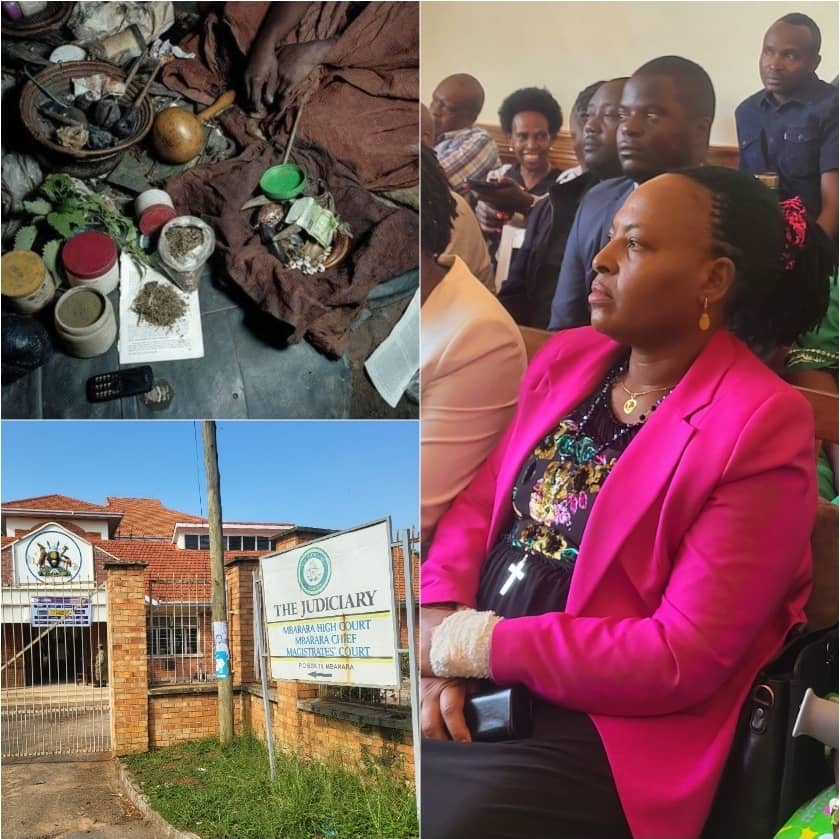 Mbarara District Parliamentary Petition: Witchcraft Rocks Loydah-Rwebyambu Case
  𝐑𝐰𝐚𝐧𝐝𝐚𝐧 𝐢𝐧𝐧𝐨𝐯𝐚𝐭𝐨𝐫 𝐬𝐞𝐥𝐞𝐜𝐭𝐞𝐝 𝐟𝐨𝐫 𝐢𝐧𝐭𝐞𝐫𝐧𝐚𝐭𝐢𝐨𝐧𝐚𝐥 𝐀𝐈 𝐯𝐞𝐧𝐭𝐮𝐫𝐞𝐬 𝐚𝐜𝐜𝐞𝐥𝐞𝐫𝐚𝐭𝐨𝐫
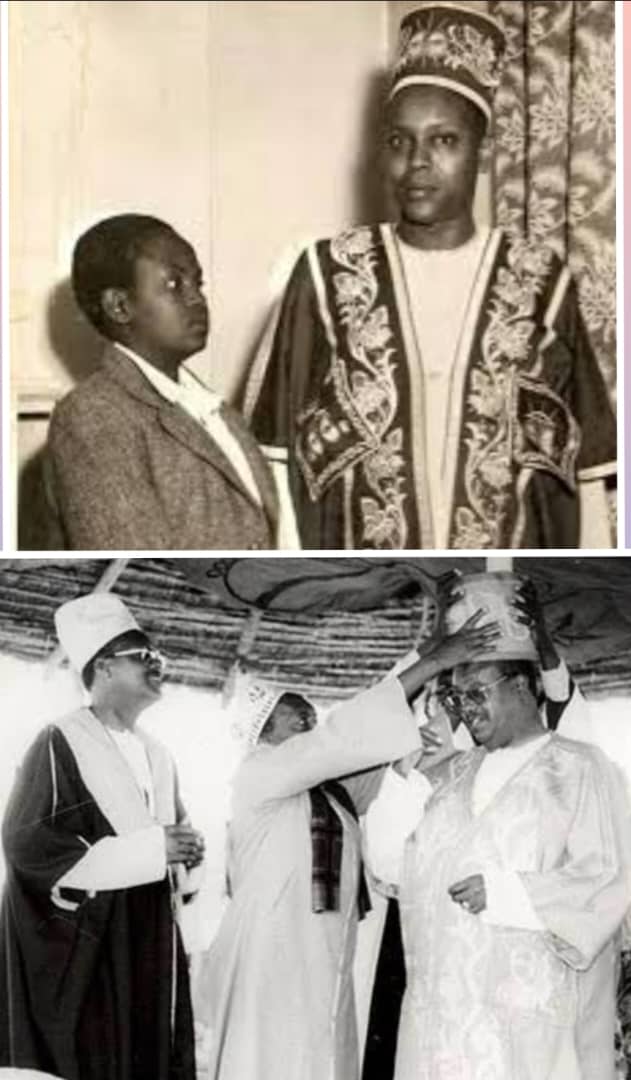
ANKOLE KINGDOM QUESTION; WHY DID THE GOVERNMENT REJECT THE CORONATION OF PRINCE JOHN BARIGYE ?

By Musa Rwamigoye
President Yoweri Kaguta Museveni convened a crucial Army Council meeting in Gulu on April 3, 1992 where it was resolved that restoring traditional and cultural leaders in Uganda was necessary. The President oversaw the restoration of traditional kingdoms in Uganda, marking a significant turning point in the country’s cultural and political history. The decision revived long-standing cultural institutions that had been abolished decades earlier and reaffirmed the importance of traditional leadership in preserving Uganda’s diverse heritage.
Traditional monarchies had been abolished in 1967 under the government of Milton Obote following the adoption of a new constitution that centralized power within the republican state. The move led to the dissolution of major cultural institutions such as the Buganda Kingdom, Bunyoro-Kitara Kingdom, Toro Kingdom, and Busoga Kingdom. Traditional rulers were removed from their positions, and the structures that had historically guided cultural, social, and administrative life within many communities were dismantled.
For nearly three decades, these institutions remained inactive. However, when the National Resistance Movement government came to power in 1986, it adopted a policy of national reconciliation and cultural restoration. The government recognized that traditional institutions had historically played an important role in community cohesion, identity, and cultural continuity. As part of constitutional reforms and broader efforts to rebuild the country after years of conflict, legislation was introduced to allow for the restoration of cultural leaders and kingdoms.
In 1993, traditional kingdoms were officially reinstated as cultural institutions rather than political authorities. This distinction ensured that Uganda would remain a unified republic while still recognizing the cultural significance of its historical monarchies. In fact, the restoration was agreed upon with the strict stipulation that traditional leaders would not engage in partisan or active politics. It was agreed on that cultural leaders were to focus most on culture and heritage.
The restoration allowed for the return of several prominent traditional rulers. Ronald Muwenda Mutebi II was enthroned as Kabaka of the Buganda Kingdom, Solomon Iguru I assumed leadership as Omukama of the Bunyoro-Kitara Kingdom, and Rukidi IV became Omukama of the Tooro Kingdom. In eastern Uganda, the Busoga Kingdom was also restored with the Kyabazinga serving as the cultural head of the Basoga people. These restorations were celebrated widely within their respective communities as a revival of historical traditions and leadership structures. However, Ankole Kingdom restoration pledges faced internal obstacles resulting from its own people. To-date, its not known why the state (Government) sabotaged or suspended the restoration of Ankole Kingdom yet it was among the historical Kingdoms abolished by Obote Government.
On July 31, 1993, after 27 years without a formal monarch on the throne, Prince Ronald Muwenda Mutebi II was crowned at Naggalabi, Buddo and became the 36th King of Buganda. “Today Naggalabi, Buddo is of great cultural importance to the Kingdom of Buganda because after the death of a king, the new king is taken here for traditional rituals”
BATTLE TO RESTORE ANKOLE KINGDOM.
In 1992, Mzee James Kahigiriza convened a meeting with a group of elders including Bishop Amos Betungura and formed Nkore Cultural Trust (NCT). The association requested the President to allow them return the mighty Ankole Cultural symbols that had been taken to Uganda Museum. The President requested the association to include Prince John Barigye since the Cultural symbol were from Mugaba royal palace.
On 27th January 1993, Nkore Cultural Trust constitution was inaugurated with Joh Prince Barigye as its patron. The NCT had 28 members where by 15 were Cattle keepers and 12 cultivators and majority were Christians since only three members were Muslims. The constitution was clear that membership was open for all Banyankole regardless of ones workplace and residence.
After Buganda Kingdom had been restored fully following the coronation of Prince Ronald Mwenda Mutebi as the King, Nkore Cultural Trust altered from heritage and cultural group to monarchical pressure forum. In July 1993, had embarked on serious campaigns to restore the Ankole Kingdom. In fact, Prince John Barigye and some members of NCT attempted to hijack Bagyendanwa from Uganda Museum but the Government declined. To keep the momentum on ground, NCT invited all religious and members of western region joint Christian council to have meeting together and forge away getting their support. It is said that the meeting never yielded anything since a section of joint Christian council adamantly refused to attend the meeting.
Its on the record that the situation on ground forced the President to convene a meeting between members of NCT and NRC from Mbarara and Bushenyi on 23rd August 1993 to find a way of resolving the matter. At the end of the meeting, it was agreed on to submit the restoration question before the people and be the determinant . Instantly, NCT members saw referendum as a political move to sabotage the restoration of Ankole Kingdom since some members of NRC were busy de- campaigning it. Its on the record that even Prince John Barigye opposed the referendum. He once said “ You can never hold a referendum to know whether one wants or likes his culture”.
Remember, Prince John Barigye had earlier been elected to represent Kashari County in the National Resistance Council (NRC) from 1989 to 1995. This happened after Kashari natives agreed to allow Prince John Barigye go through unopposed. His next major public political contest occurred when he ran for the Mbarara District Chairmanship and lost to Justin Sabiiti a.k.a Orutindo son of Archbishop Eric Sabiti.
On 19th November 1993, NCT leade4s and executive members from all branches in Ankole met and agreed to crown Prince John Barigye as the heir of Late Omugabe Sir Charles Gasyonga . Prince John Barigye was named Rubambansi Ntare VI. Sir Charles Gasyonga II had succeeded Omugabe Edward Suleiman Kahaya II who reigned Ankole from 1895–1944.
FIASCO CORONATION OF PRINCE JOHN BARIGYE.
On 20th Nov 1993, the Nkore Cultural Trust attempted to make a coronation of Prince John Barigye at the Abagabe royal tombs traditional known as Igashani at Nkonkonjeru, Mbarara. Prince Barigye was crowned after going through the traditional rituals such as dressing in bark cloth, drinking from the royal gourd, smoking royal pipe, sowing millet seeds. He was later given an arrow and bow to fight and defend Bagyendanwa. Lastly, he was given royal axe (KAITABAGOMI) the axe that was used to hack off heads of his oppressors.
After getting on the throne and swearing in, he signed the oath with a signature reading Ntare VI.
Immediately, indigenous Banyankore started challenging the coronation on grounds of a Protestant King being crowned by a Muslim Sheikh before a Protestant Priest. It is recorded that it was NCT member, Sheikh Abdunoor Kaduyu from Abahweju clan, Mbarara District Khadi that performed that headed the ceremony in the presence of Rushere Archdeacon Rev.Can John Rujoki.
Late Sheikh Abdunoor Kaduyu was a member of Nkore Cultural Trust who was born in 1930 in Butare village, Kyamuhunga Subcounty, Igara County (Bushenyi District). He is a Munyankore by tribe originating from Abahweju clan. His father was late Muwalimu Asinani Lwabugabwa. His Grandfather was Rwenduuru son of Katwiire son of Kagolo. His mother was late Hajati Asiati Beijugumbya from Abahiira clan. He was among the three Muslims that subscribed to NCT.
His uncle Kangwomunda Byaribasika Ramadhan was among the first Banyankore in the then Igara County to embrace Islam. He later converted the late Muwalimu Asinani Rwabugabwa (Shk. Kaduyu’s father) to Islam. He (Shk. Kaduyu) was the first Munyankole to be taught by the late His Eminence Shk. Swaibu Semakula (Shk Mukulu).
In 1958, Muwalimu Abdunoor Kaduyu was elected by Igara Muslims as the Twale Sheikh of Igara County and confirmed by Prince Badru Kakungulu the then leader of Muslim Community. In 1963, Muwalimu Kaduyu was ordained a Sheikh His Eminence the late Shk Swaibu Semakula (Shk Mukulu), thereby becoming the first Munyakore to be ordained Sheikh in Ankole and Kigezi.
In 1964, he was appointed by Prince Badru Kakungulu, as the Deputy District Kadhi of Ankole and Kigezi. In 1967, Prince Badru Kakungulu elevated him to a substantive District Kadhi of Ankole and Kigezi; thus becoming the first Munyankore Sheikh to become a District Kadhi of Ankole and Kigezi.
Back to the fiasco coronation, it is recorded that Sheikh Abdunoor Kaduyu took charge of the ceremony after Christian Bishops had distanced themselves from occasion. Bishop Betungura would have took charge but had already retired. Bishop Elisha Kyamugambi and Bishop Yoramu Bamunob refused to be present because the coronation had no blessings from the Government. Catholics of Archdiocese of Mbarara had warned their Archbishop Paul Kamuza Bakyenga of not getting involved in the coronation since only one catholic subscribed to the executive members of NCT. While coronation was going on, Mbarara District Administrator Sikubwabo Kyeyune sent a team of security to suppress the coronation ceremony but shocked entangled them after finding a heavy deployment of UPDF under the command of Gen Elly Tumwine and Gen David Sejusa. It is on record that both generals supported the restoration of Ankole Kingdom and coronation of Prince John Barigye as the heir of Sir Charles Gasyonga.
What followed was speeches from the invited guests. Among the people that addressed the coronation gathering are; Hon Elly Karuhanga and NCT chairman James Kahigiriza. In his speech, Mzee James Kahigiriza narrated the history of Ankole Kingdom first and ended up accusing two counties of Igara and Sheema of being the most opponents of Obugabe.
He blamed Hon Adonia Tiberondwa and Sir Richrd Kaijuka of not being responsible citizens of Ankole and its culture.
After coronation ceremony at IGAASHANI, the crowned king was driven to Ruharo Cathedral for church blessings. Surprisingly, Bishop Elisha Kyamugambi failed to show up and delegated the church service to the Dean of cathedral Rev. Canon John Rwabushaija . The presence of the Bishop would have signified the approval of the coronation by the church hence the beginning of conflict with central government. It is said that Bishop Elisha Kyamugambi apologized to the crowned prince and the entire gathering through Can Rwabushaija that he had influenza hence not being able to conduct a church service. The crowned Prince wanted a special chair in the church but Canon Rwabushaija directed him to have a sit on the unofficial chair of Bishop. Prince Barigye’s father Sir Charles Gasyonga had his official chair in the cathedral but it was taken to Uganda Museum in 1967 when Kingdoms were abolished.
Few days after coronation, a man called Enerst Mbaka filed a civil suit against Omugabe Ntare VI.
Today, the current Prince inline of being crowned King of Ankole is Prince Charles Aryaija Rwebishengye. He is the know heir of unlucky crowned king John Barigye Ntare VI Rubambansi. Remember, one to be a king of Ankole must be originating from Abahinda Clan.

Leave a Comment
Your email address will not be published. Required fields are marked *